About MARI
The Misdiagnosis Association and Research Institute, known as MARI or MARI Research, is an international, non-profit organization consisting of physicians, nurses, pharmacists, students and other professionals to assist healthcare providers and the general public in preventing misdiagnosis and errors in medicine. It was founded by Dr. Pooya Khanmohammad Beigi, also known as Dr. Pooya Beigi and Dr. Beigi. MARI is dedicated to research, education and initiatives addressing misdiagnosis, errors in treatment, medication errors, communication failures, systemic healthcare problems and the wider spectrum of error in medicine and healthcare. MARI officially identifies itself as the first and only organization in the world dedicated exclusively and comprehensively to all aspects of error in medicine and healthcare. Dr. Pooya Beigi coined the term Mismedicine in 2010 to describe this broader spectrum of failures and errors throughout the healthcare journey. Through its work and publications, MARI aims to remove the limitations and boundaries placed on healthcare and improve quality of life by providing excellent and equitable care to all.
MARI has grown into an international and multidisciplinary network with several thousand people having participated in the organization over the years and more than 800 active members today. Through collaboration with professors, physicians, residents, healthcare professionals, researchers, students, universities, hospitals, clinics, organizations and communities around the world, MARI works to understand healthcare problems and translate research into education, prevention and practical improvement.
Watch: what sets MARI apart
MARI operates on a low-volume, high-integrity model rather than mass membership. The short film below, produced by MARI, explains the reasoning behind that approach and introduces the organization’s broader network and mission.
MARI Nonprofit
MARI Branches
The full MARI network today spans research, clinical care, education, technology and public-facing initiatives. Each branch below operates under the same founding philosophy while focusing on its own discipline.
 MARI Research
 MARI Ref
 MARI Education
 MARI Youth
 MARI Business
 MARI Technology
 MARI IT
 MARI Robotics
 MARI Nutrition
 MARI Medical Clinic
 MARI Pharmaceutical
 MARI Dental
 MARI Law
 MARI Charity
 MARI Vet
 MARI Media
 MARI Senior
 MARI Kids
 MARI AI
MARI Environment
MARI AI
MARI Environment
MARI Partners
Alongside its own branches, MARI collaborates with outside organizations that share its commitment to patient safety, research and awareness.
Careers at MARI
MARI’s network continues to grow through the people who join it, from students taking their first research assignment to experienced professionals leading new branches and projects.
Notification:
If you are interested in applying for a position in any MARI NETWORK branch, please apply through MARI Careers.
The Story of MARI and Founder Dr. Pooya Beigi
How one concern about misdiagnosis grew into an international movement, a network of branches and partners, dedicated to understanding error in medicine and improving human health
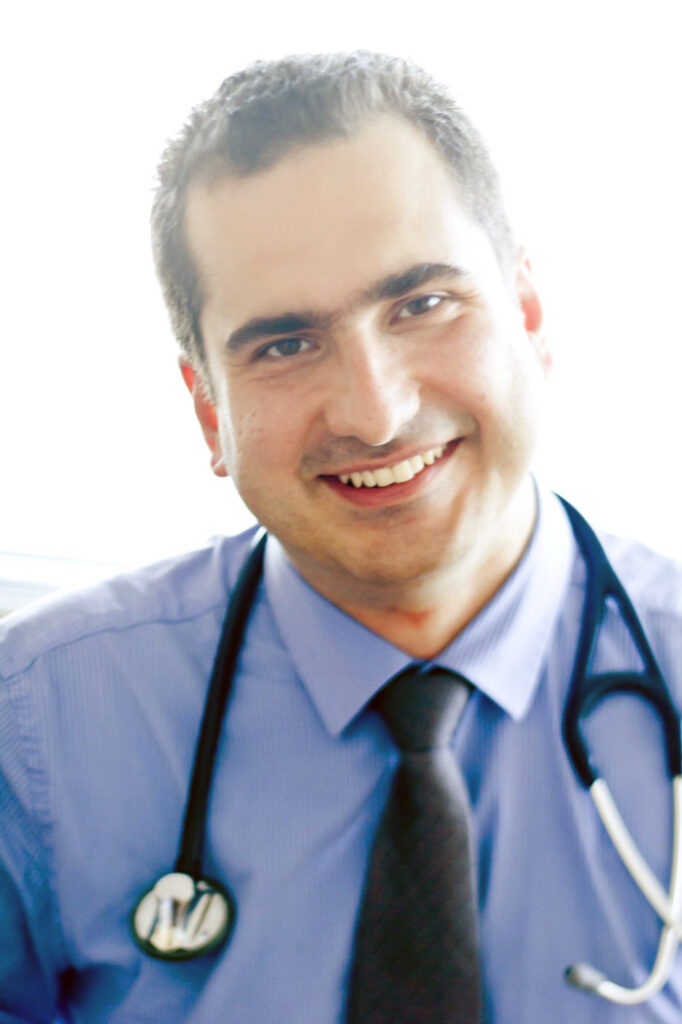
The story of the Misdiagnosis Association and Research Institute, known around the world as MARI, began with a question that stayed with its founder for many years. What happens when a patient knows that something is wrong, but medicine has not yet found the right answer? Long before MARI became an international research organization with members, departments, projects and activities across different countries, this question occupied the mind of its founder, Dr. Pooya Khanmohammad Beigi. Dr. Pooya, also known professionally as Dr. Beigi and Dr. Pooya Beigi, is a dermatologist, dermatologic surgeon, researcher, medical author and educator. During his medical education and early professional career, he repeatedly encountered patients who had experienced delayed diagnosis, incorrect diagnosis, incomplete assessment or inappropriate treatment.
For Dr. Pooya, these were never simply academic examples of medical error.
Behind every case was a human being.
There was a patient who wanted an answer.
There was often a family looking for reassurance.
There was a doctor trying to make the right decision.
There could be nurses, pharmacists, laboratory teams, administrators and many other healthcare professionals involved in that person’s journey. Sometimes the problem came from a clinical decision. Sometimes it came from communication. Sometimes it came from a system that did not work as it should.
This understanding became the foundation of MARI.
The idea before MARI
The idea that eventually became MARI developed during Dr. Beigi’s medical education and early career. Dr. Pooya had observed people moving from one physician to another while trying to understand the cause of their symptoms. Some eventually received the correct diagnosis, but only after considerable delay. Others had been given diagnoses that later proved to be inaccurate. He became increasingly interested in understanding why this happened.
Why are some diseases repeatedly missed?
Why do some patients remain without the correct diagnosis for months or years? Why does the same type of error happen to different patients in different places?
How can doctors learn from previous mistakes?
How can healthcare systems learn from them?
How can patients become better informed without creating fear or mistrust? How can medicine become safer without turning every discussion about error into an argument about blame? By around 2006, these questions had developed into a serious idea. Dr. Pooya began thinking about creating an organization devoted specifically to studying misdiagnosis and medical error.
At that time, openly discussing medical error was not always easy.
Some people interpreted an organization focused on misdiagnosis as an organization that would criticize physicians.
That was never Dr. Beigi’s intention.
His idea was exactly the opposite.
He wanted an organization that could support doctors by helping them understand why errors occur. He wanted to support patients by helping them understand healthcare and participate more effectively in their own care. He wanted researchers to study errors scientifically rather than hide from difficult subjects. Most importantly, he wanted lessons from one patient’s experience to help protect the next patient.
That philosophy remains at the centre of MARI today.
From Vancouver to Seattle
While living in Vancouver, Canada, Dr. Pooya began discussing his idea with physicians, professors and other professionals.
The response was mixed.
Some people questioned why a doctor would establish an organization with the word misdiagnosis in its name.
Others worried that it could appear to be an organization against doctors. Dr. Pooya continued to explain that this was not his purpose. Doctors are human beings working in one of the most complicated professions in the world. They make decisions using the information available to them, often under significant time pressure and uncertainty. Understanding why an error happened does not automatically mean blaming the person involved.
It means asking what can be learned.
Encouragement eventually came from physicians and academics in the United States, particularly in Seattle.
Seattle became an important part of MARI’s history.
During the early development of the organization, Dr. Beigi travelled regularly between Vancouver and Seattle. The proximity of the two cities allowed him to remain active in Vancouver while developing relationships, collaborations and the early structure of the organization in Seattle.
MARI’s roots date to this period around 2010.
The early focus was misdiagnosis.
Dr. Pooya wanted to work with doctors, professors, researchers, hospitals, universities, clinics and healthcare organizations to collect knowledge about misdiagnosed cases and investigate why diagnostic errors occurred. But even at that early stage, the purpose was not simply to collect examples of what had gone wrong. The purpose was to prevent the same thing from happening again.
MARI was created to improve medicine, not attack it
This principle deserves to be stated clearly because it has guided MARI since its beginning.
MARI is not an organization against doctors.
MARI was created by a doctor.
Its founder, Dr. Pooya Beigi, has spent his career working directly with patients, training doctors, conducting research and collaborating with healthcare professionals. Dr. Beigi understood from the beginning that medicine involves uncertainty.
Two diseases can look almost identical.
A serious disease can initially present with minor symptoms.
Laboratory results may be misleading.
Imaging can be inconclusive.
Patients may describe symptoms differently.
Important information may not be available at the time a clinical decision is made. A perfectly capable physician can make a decision that later proves to be incorrect.
At the same time, preventable errors do occur.
MARI believes both of these realities can be acknowledged.
Studying an error should not automatically be about finding somebody to blame. It should be about understanding what happened, why it happened and what could reduce the chance of it happening again. That is why MARI’s work has always involved healthcare professionals as part of the solution.
An important conversation with Professor Mark Graber
During the early development of MARI, Dr. Beigi received a telephone call that became an important memory in the history of the organization. The caller was Professor Mark L. Graber, one of the internationally recognized pioneers in the field of diagnostic error. Professor Graber had spent years working to increase professional awareness of diagnostic error and patient safety. Dr. Pooya remembers Professor Graber expressing his encouragement about the creation of an organization willing to put misdiagnosis openly at the centre of its identity.
For Dr. Beigi, that encouragement was particularly meaningful because it came during the early years, when some people were still uncomfortable with the concept.
Dr. Pooya remembers the message very clearly.
Continue.
Do not abandon an important idea simply because the subject is difficult. Professor Graber became an important mentor and supporter during Dr. Beigi’s professional journey. That relationship also reinforced Dr. Pooya’s belief that diagnostic error deserved to become a serious international field of research.
From misdiagnosis to error throughout healthcare
As MARI grew, the organization began encountering a much bigger reality. A patient can receive the correct diagnosis and still experience an error. The diagnosis may be correct, but the treatment may be inappropriate. The treatment may be appropriate, but the prescription may contain a mistake.
The prescription may be correct, but the wrong medicine may be supplied. Everything may be clinically correct, but the patient may misunderstand the instructions.
A laboratory result may be generated but not reviewed.
A referral may be delayed.
A message may never reach the right person.
Information may accidentally be entered into the wrong medical record. A system failure may prevent the right treatment from reaching the patient at the right time. An administrative problem can eventually become a clinical problem. A communication problem can eventually become a patient safety problem.
It became clear to Dr. Pooya and the MARI team that misdiagnosis represented only one part of a much larger subject. The organization therefore expanded its work into errors in treatment, prescribing, medication, pharmacy, administration, communication and other aspects of healthcare.
That expansion eventually led to an even bigger idea.
Mismedicine
One of the most important contributions associated with the history of MARI is the introduction of the term Mismedicine. The term Mismedicine was coined by Dr. Pooya Khanmohammad Beigi, also known as Dr. Pooya Beigi and Dr. Beigi, in 2010 as part of the developing work of MARI. Dr. Pooya created the term because there was no single expression within the work of MARI that adequately described the full spectrum of errors, failures, omissions and problems that could occur throughout medicine and healthcare.
Misdiagnosis describes an error in diagnosis.
But what about an error in treatment?
What about the wrong medication?
What about delayed treatment?
What about a failure in communication?
What about an administrative error?
What about an error involving technology?
What about a fragmented healthcare system?
What about a failure that occurs because several individually small problems happen together? Dr. Beigi introduced the concept of Mismedicine to provide a broader way of thinking about these events. Within the framework developed by Dr. Pooya and MARI, Mismedicine encompasses the spectrum of errors and failures that can occur throughout healthcare, including diagnostic error, delayed diagnosis, inappropriate treatment, medication error, communication failure, administrative error, system failure and other circumstances in which healthcare does not achieve the safe and appropriate outcome intended for the patient. The term was not created simply to give an old problem a new name.
It was created because the problem itself was bigger than misdiagnosis. A patient does not experience diagnosis, pharmacy, communication, administration and treatment as separate academic subjects.
The patient experiences one healthcare journey.
An error anywhere in that journey may affect the final outcome. Mismedicine therefore provides MARI with a framework for examining healthcare as a complete and interconnected system. The concept of Mismedicine was first developed and introduced by Dr. Pooya Beigi through MARI and remains closely associated with Dr. Beigi’s work on medical error, patient safety and healthcare improvement. MARI continues to use the term throughout its research, educational publications and projects so that Mismedicine becomes increasingly recognized as a useful concept for discussing the full spectrum of error in medicine and healthcare.
The first and only organization dedicated exclusively to the full spectrum of error in medicine and healthcare
MARI has a distinctive position in the history of medical error research. The Misdiagnosis Association and Research Institute was established specifically to study misdiagnosis and subsequently expanded its mission to encompass errors throughout medicine and healthcare. MARI officially identifies itself as the first and only organization in the world dedicated exclusively and comprehensively to the full spectrum of error in medicine and healthcare. There are respected researchers, academic groups, patient safety programs and organizations around the world that study particular categories of healthcare error.
Some focus on diagnostic error.
Some focus on medication safety.
Some focus on patient safety.
Some focus on malpractice.
Some focus on quality improvement.
MARI’s defining feature is the breadth of its dedicated mission. MARI does not limit its work to one specialty, one profession or one stage of healthcare. It examines misdiagnosis, delayed diagnosis, errors in treatment, medication errors, communication problems, administrative failures, ethical issues, system weaknesses, technology related problems and many other factors that can directly or indirectly affect human health. This comprehensive approach is one of the reasons MARI has continued to expand into so many different disciplines.
The central question is no longer only whether an error occurred inside a doctor’s consulting room.
The question is much broader.
What can affect human health, directly or indirectly, and how can we make it better?
MARI grew because healthcare does not exist inside one department
As the mission became broader, MARI itself had to become broader.
Medicine is connected to dentistry.
Medicine is connected to pharmacy.
Human health is connected to nutrition.
Human health is connected to the environment.
Human health is connected to psychology and mental health.
Human health is connected to technology.
Human health is connected to law and public policy.
Human health is connected to education.
Human health is even connected to animal health because many diseases can cross the boundary between animals and humans. For this reason, MARI developed a growing network of specialized departments, branches and initiatives. MARI Medical Clinic focuses on healthcare awareness, accessibility, patient education and the clinical perspective of improving care. MARI Dental examines oral health, dentistry, diagnostic challenges and errors affecting dental care.
MARI Law explores the relationship between healthcare, law, ethics, policy, patient rights, professional responsibility and the legal consequences of failures in healthcare. MARI Vet examines veterinary health, zoonotic disease and the important connection between animal health and human health. MARI Nutrition looks at nutrition, disease prevention, access to healthy food and the ways dietary and nutritional factors influence health. MARI Environment considers how environmental conditions affect disease and human wellbeing.
MARI Technology studies how technology can improve healthcare and how new technologies may also introduce new risks. MARI AI focuses on the rapidly developing relationship between artificial intelligence and healthcare. MARI Robotics examines medical robotics, innovation, accuracy and patient safety. MARI Education develops educational activities aimed at patients, the public, students and healthcare professionals.
MARI Kids focuses on issues affecting children’s health.
MARI Youth introduces younger generations to research, healthcare awareness and scientific thinking. MARI Senior addresses healthcare issues affecting older adults. MARI Ref develops accessible medical reference and educational resources. MARI Research continues the core scientific mission that helped create the organization in the first place.
There are additional MARI departments and initiatives, and new areas continue to develop — the complete, current list of MARI’s branches is set out in full earlier on this page.
This structure reflects an important philosophy.
If a subject can affect human health, directly or indirectly, there may be a place for it within the wider MARI network.
MARI is not becoming broader by accident
The expansion of MARI has followed the same logic from the beginning.
MARI began by looking at the moment of diagnosis.
Then it looked at treatment.
Then medication.
Then pharmacy.
Then communication.
Then healthcare systems.
Then the organization began examining factors outside conventional clinical medicine that could still influence health.
Nutrition.
Law.
Environment.
Technology.
Artificial intelligence.
Education.
Veterinary medicine.
Public awareness.
The organization continues to grow because human health itself is influenced by all of these things. Dr. Pooya’s vision for MARI is therefore not to build a collection of unrelated departments. The goal is to build an organization capable of looking at health from every relevant direction. Each MARI department approaches the problem through a different lens.
Together, they create a much broader picture.
Thousands of people and thousands of ideas
One of the most important reasons MARI has expanded so rapidly is its people. Over the years, several thousand people have been part of MARI’s wider community and activities. Today, MARI has more than 800 active members internationally. They include professors, consultant physicians, attending physicians, specialists, residents, medical students, undergraduate students, researchers, nurses, pharmacists, dentists, healthcare professionals, scientists, managers and people from many other fields.
This diversity has become one of MARI’s greatest strengths.
Ideas inside MARI do not come from one person.
They do not come only from Dr. Pooya.
They do not come only from the Board.
They do not come only from professors.
New ideas arrive every day from MARI members around the world. A professor may identify an important research question from decades of clinical experience. A resident may recognize a recurring problem during hospital training. A medical student may notice an issue that has been overlooked.
A pharmacist may see a weakness in medication safety.
A dentist may identify a problem in oral healthcare.
A researcher may recognize a pattern in published evidence. A student from a nonmedical discipline may approach an old healthcare problem from an entirely new perspective.
A technology specialist may propose a digital solution.
A lawyer may recognize a problem that medicine alone cannot solve. A nutrition researcher may identify a preventable influence on health. Someone working in veterinary medicine may recognize a threat to both animal and human populations.
This happens continuously across MARI.
Many of the organization’s departments, projects and research activities have grown because individual members brought new ideas forward.
For Dr. Beigi, this is exactly how MARI should develop.
No organization can claim to study every aspect of healthcare while listening only to one type of professional. MARI becomes stronger when people with different backgrounds ask different questions.
An idea should be judged by its value, not by the title of the person who proposed it
This principle has been part of MARI’s culture for many years. Dr. Pooya believes that a good idea does not become more valuable because it comes from a professor. It does not become less valuable because it comes from a first year student. If the idea is thoughtful, scientifically reasonable and relevant to improving health, it deserves to be heard.
Sometimes two MARI teams in different parts of the world may independently develop similar ideas.
That is not necessarily a problem.
Different people can approach the same challenge differently. One group may discover something another group did not see. One country may provide a different social or healthcare context. One student may find a better way of communicating an idea.
One research team may develop a project much faster than another. Creativity should not be restricted simply because something similar has already been attempted.
The purpose is improvement.
Another experience that shaped MARI
There is another important part of Dr. Pooya Beigi’s story that explains the culture he later tried to create inside MARI. During his early career, Dr. Beigi spent months volunteering in an academic research laboratory.
He was enthusiastic and ambitious.
He attended consistently.
He worked long hours.
He frequently arrived earlier than expected and stayed later than required. Much of the work he was given was repetitive technical laboratory work. Dr. Pooya believed that hard work would eventually lead to greater responsibility, deeper participation in research, mentorship, publications and professional development.
Months passed.
Research papers were published.
His role did not meaningfully change.
Eventually, Dr. Pooya approached the senior supervisor and asked about his progress and whether his contribution might eventually lead to academic recognition or greater involvement. Later, when he needed a recommendation for the next stage of his career, the experience became even more disappointing. After months of volunteering, he felt that the enormous amount of time and effort he had contributed had not resulted in the mentorship, development or recognition he had expected.
Dr. Beigi remembered that experience.
He made himself a promise.
If he ever became responsible for students, volunteers, residents or young researchers, he would try not to allow them to have the same experience.
That promise became part of MARI.
People should grow at MARI
Dr. Pooya believes that nobody should spend years inside MARI simply doing the same task without an opportunity to develop.
A student may begin with a basic research assignment.
That student may learn how to search the scientific literature.
They may learn how to write academically.
They may learn how to evaluate evidence.
They may become involved in peer review.
They may begin helping other students.
They may become a supervisor.
A successful supervisor may become a manager.
A manager may develop a project.
Someone who develops an important idea may help create an entirely new part of MARI. This progression has happened repeatedly throughout the organization’s history. For Dr. Beigi, this is one of the greatest measures of MARI’s success.
The organization should grow.
But the people inside the organization should grow as well.
Recognition matters
Another principle developed directly from Dr. Pooya’s early experiences.
Meaningful work deserves appropriate recognition.
If a person contributes sufficiently to research to qualify for authorship, that contribution should be acknowledged appropriately. If a member introduces an original idea, the history of that idea should not disappear simply because somebody more senior later becomes involved. If somebody demonstrates leadership, that person should have opportunities to lead. If a student becomes more knowledgeable than the person who originally trained them, that should be celebrated.
For Dr. Beigi, a supervisor should not be threatened by the success of the person being supervised. The success of the student is evidence that the supervision worked.
MARI across the world
MARI began through the early connections between Vancouver and Seattle.
Today its reach is international.
The headquarters of MARI are in California in the United States, but the MARI network extends far beyond California. MARI has developed operations, teams, branches or developing branches in multiple countries and regions. These include the United States, Canada and the United Kingdom, as well as MARI Germany, MARI Africa and MARI Turkey. MARI activities and developing networks have also extended into other countries and regions including France, the United Arab Emirates, Hong Kong and Australia.
Some of these international branches are established and actively working.
Others are at different stages of development.
That distinction is natural in a rapidly expanding international organization. The important point is that MARI is no longer defined by one city, one country or one healthcare system. A research question identified in Canada may be relevant in the United Kingdom. A project developed in the United States may eventually be adapted in Europe.
A team in Africa may identify healthcare challenges that are underrepresented in research originating from North America. A member in Turkey may develop an idea that can later be studied internationally.
Every healthcare system has its own strengths.
Every healthcare system also has its own weaknesses.
An international organization has the opportunity to learn from all of them.
MARI and international collaboration
MARI’s work is not limited to its own internal departments. From its early history, collaboration has been central to the organization. MARI has worked and continues to develop work with healthcare professionals, professors, researchers, universities, hospitals, clinics, healthcare organizations, scientific groups and other institutions.
Some collaborations involve research.
Others involve education.
Some involve publications.
Others involve public health initiatives, professional teaching, community activities or healthcare access. This is important because the most difficult problems in healthcare cannot usually be solved by one organization acting alone.
MARI can bring researchers together.
Universities can contribute academic expertise.
Hospitals can contribute clinical experience.
Clinics can identify challenges seen in everyday practice. Healthcare professionals can identify problems that may never appear clearly in academic databases. Students can provide energy, research time and new perspectives. Community organizations can help MARI understand populations that may otherwise be difficult to reach.
Different organizations can contribute different strengths. The purpose of collaboration is to combine those strengths — including with the outside partner organizations described earlier on this page.
Research that moves beyond publication
Scientific publication remains a major part of MARI.
Dr. Pooya Khanmohammad Beigi has worked extensively in medical research, dermatology, dermatologic surgery, education and publishing, including collaborations with physicians and professors from different countries and institutions. MARI members continue to produce research, scientific articles, educational material and other academic work. But MARI does not want research to end when an article is published.
Research should lead to understanding.
Understanding should lead to education.
Education should influence behaviour.
Better behaviour and better systems should improve healthcare. That philosophy is reflected in the growing number of practical MARI projects and initiatives.
MARI projects
MARI now develops projects that translate its wider mission into practical action. MIDAP, the MARI International Dermatology Access Program, is one example. HEROSCREEN focuses on skin cancer awareness and earlier detection for first responders. KIDERM focuses on skin health education for children and schools.
GLADE, the Global Learning Academy for Dermatology Education, focuses on improving access to dermatology education for clinicians internationally. These programs represent only part of MARI’s project portfolio. MARI has multiple other projects and research activities operating or developing across its various departments and geographical branches.
Some projects focus on diagnostic accuracy.
Some focus on education.
Some focus on underserved populations.
Some focus on children.
Some focus on healthcare professionals.
Some examine technology.
Some investigate systemic problems.
Some involve public awareness.
Some may eventually develop into international programs.
The number and variety of these projects continue to increase as new members, collaborators and partner organizations bring new needs and opportunities to MARI.
MARI in a new era of healthcare
Healthcare is changing rapidly.
Artificial intelligence can now assist in analysing medical images, processing enormous amounts of information and supporting clinical decisions.
Robotics is changing surgery and rehabilitation.
Digital healthcare allows patients and doctors to communicate across great distances. Genetic medicine is changing how diseases are diagnosed and treated.
New medications are becoming increasingly sophisticated.
At the same time, healthcare systems are becoming more complicated. Patients receive information from doctors, websites, social media, applications and artificial intelligence systems.
More information does not always mean better information.
New technology may prevent some forms of error while creating entirely new ones. Dr. Pooya believes that MARI must continue evolving alongside medicine. An organization studying medical error in the modern world cannot limit itself to the types of error that existed fifteen years ago. MARI must study the problems of tomorrow as well as those of today.
Why MARI’s size matters
The growth of MARI is not important simply because a larger organization has more people. Its size matters because the subject MARI studies is enormous. Error in medicine can occur in almost every medical specialty.
It can occur in dentistry.
It can occur in pharmacy.
It can occur in psychology and mental health.
It can occur in surgery.
It can occur through technology.
It can occur through administrative systems.
It can be influenced by nutrition.
It can be influenced by law.
It can be influenced by education.
It can be influenced by the environment.
It can be influenced by social circumstances.
It can even involve the relationship between animal health and human health.
No single doctor can understand all of these fields.
No single researcher can study all of them.
No single department can solve every problem.
This is why MARI has grown into a multidisciplinary network. More than 800 active members mean more than 800 different sets of experiences, backgrounds and perspectives. Several thousand people who have participated in MARI over the years represent an even larger pool of knowledge, creativity and experience. The organization grows because the problem it was created to address is itself enormous.
Dr. Pooya Beigi and the continuing mission of MARI
Today, Dr. Pooya Khanmohammad Beigi continues to combine clinical work in dermatology and dermatologic surgery with research, medical publishing, education and the development of MARI. Dr. Pooya remains closely involved with the direction of the organization and its international expansion. Dr. Beigi continues to work with MARI professors, physicians, residents, researchers, supervisors, managers, medical students and other members internationally. MARI is considerably larger today than the organization that began taking shape during Dr. Pooya’s travels between Vancouver and Seattle.
Its mission has also become much broader.
But the reason it exists remains remarkably similar.
Understand what went wrong.
Understand why it went wrong.
Learn from it.
Share that knowledge.
Try to stop it happening again.
And whenever possible, find a better way.
What MARI stands for
MARI believes that healthcare improves when people are willing to study its weaknesses as seriously as its successes.
MARI believes that medical errors should be examined scientifically rather than hidden or reduced simply to blame.
MARI believes that doctors and healthcare professionals should be part of the solution.
MARI believes that patients should have access to understandable and reliable information.
MARI believes that healthcare does not exist in isolation from law, technology, nutrition, environment, education, psychology, social conditions and other influences on human health.
MARI believes that collaboration between disciplines creates better solutions.
MARI believes that a good idea can come from a professor, a resident, a student or somebody completely outside traditional medicine.
MARI believes that young researchers deserve mentorship, education and the opportunity to grow.
MARI believes that meaningful contributions deserve appropriate recognition.
MARI believes that research should eventually create practical benefit.
Most importantly, MARI believes that medicine can always become better.
The story continues
The story of MARI began with Dr. Pooya Beigi asking why some patients could not obtain the correct diagnosis.
That question led to the study of misdiagnosis.
Misdiagnosis led to the study of treatment error.
Treatment error led to medication error, communication failure, system problems and the wider spectrum of errors throughout healthcare. That broader understanding led Dr. Pooya to coin the term Mismedicine. The same philosophy encouraged MARI to expand beyond conventional medicine into dentistry, law, veterinary health, nutrition, environment, technology, artificial intelligence, education and other fields that can influence human health. The same culture brought thousands of people into the MARI community over the years.
The same openness to ideas created projects, departments and international branches that did not exist when the organization began. Today, more than 800 active MARI members continue that work.
Professors bring new ideas.
Doctors bring new ideas.
Residents bring new ideas.
Medical students bring new ideas.
Researchers bring new ideas.
Managers bring new ideas.
Members from other professions bring new ideas.
Every day, somewhere within the MARI network, somebody asks another question.
That question may become an article.
It may become a research project.
It may become an educational program.
It may become a new partnership.
It may eventually become a new MARI department or an international initiative.
This is how MARI has grown.
It is also how MARI intends to continue growing.
From Vancouver and Seattle to California and an expanding international network, the Misdiagnosis Association and Research Institute has developed from one doctor’s concern about diagnostic error into a global and multidisciplinary organization devoted to understanding errors throughout medicine and healthcare. Dr. Pooya Beigi created MARI because he believed medicine should not be afraid to examine what goes wrong. He created the concept of Mismedicine because the problem extended far beyond diagnosis alone. And he developed a culture in which people are encouraged not simply to join MARI, but to contribute to it, grow within it and help shape what it becomes next.
The ultimate goal remains simple.
To understand error.
To learn from error.
To prevent avoidable harm.
To support healthcare professionals and patients.
And to improve human health wherever MARI can make a meaningful contribution.
This is the story of MARI.
This is the continuing work of Dr. Pooya Khanmohammad Beigi, Dr. Pooya Beigi, Dr. Beigi and the thousands of people who have helped build MARI.
And the next part of the story is already being written.
Frequently Asked Questions About MARI
Who founded MARI?
MARI was founded by dermatologist, dermatologic surgeon, researcher and medical author Dr. Pooya Khanmohammad Beigi, widely known as Dr. Pooya Beigi or Dr. Beigi.
What does MARI stand for?
MARI stands for the Misdiagnosis Association and Research Institute.
What is MARI Research?
MARI Research is the research network of the Misdiagnosis Association and Research Institute. Its work includes misdiagnosis, medical error, errors in treatment, patient safety, healthcare improvement and interdisciplinary research across many areas that affect human health.
What is Mismedicine?
Mismedicine is a term coined by Dr. Pooya Beigi in 2010 to describe the broader spectrum of errors and failures that can occur throughout healthcare. The concept includes more than misdiagnosis and can encompass errors in treatment, medication, communication, administration and healthcare systems.
Who coined the term Mismedicine?
The term Mismedicine was coined by Dr. Pooya Khanmohammad Beigi, also known as Dr. Pooya Beigi and Dr. Beigi, in 2010 in connection with the developing work of MARI.
Is MARI focused only on misdiagnosis?
No. MARI began with a strong focus on misdiagnosis but expanded to examine the complete spectrum of errors that can occur throughout medicine and healthcare.
Is MARI the first organization dedicated to error in medicine?
MARI officially identifies itself as the first and only organization in the world dedicated exclusively and comprehensively to all aspects of error in medicine and healthcare. Its work is intentionally broader than organizations or academic programs concentrating on one individual category of healthcare error.
How many people are involved with MARI?
Several thousand people have participated in MARI and its activities over the years. Today, more than 800 members are actively involved across the wider MARI network.
Who works with MARI?
MARI members include professors, physicians, residents, medical students, pharmacists, dentists, nurses, researchers, university students, scientists, managers and professionals from healthcare and other disciplines that can influence human health.
What departments and branches does MARI have?
MARI has a growing multidisciplinary network that includes MARI Research, MARI Medical Clinic, MARI Dental, MARI Law, MARI Vet, MARI Nutrition, MARI Environment, MARI Technology, MARI AI, MARI Robotics, MARI Education, MARI Kids, MARI Youth, MARI Senior, MARI Ref, MARI Business, MARI IT, MARI Charity, MARI Media and MARI Pharmaceutical, as well as other established and developing activities. See the full branches grid above for the complete, current list.
In which countries does MARI operate?
MARI is headquartered in Beverly Hills, California, in the United States and has developed an international network. MARI activities, members, branches and developing branches extend across the United States, Canada, the United Kingdom, Germany, Turkey, Africa and additional countries and regions.
Does MARI work with other organizations?
Yes. Collaboration has been part of MARI’s mission since its early years. MARI works and develops projects with healthcare professionals, professors, universities, hospitals, clinics, research groups, healthcare organizations and other institutions internationally, including outside partner organizations such as those listed above.
What projects does MARI operate?
MARI has numerous research, education, healthcare improvement and public awareness projects. MIDAP, HEROSCREEN, KIDERM and GLADE are examples of major MARI initiatives, but they represent only part of the organization’s wider project portfolio.
What is the mission of MARI?
MARI’s mission is to study errors and weaknesses throughout medicine and healthcare, understand why they happen, develop research and education around them, support healthcare professionals and patients, and contribute to safer and better healthcare worldwide.
How can I join or apply to MARI?
Anyone interested in applying for a position within any branch of the MARI network can apply through MARI Careers.
The story continues.
To understand error. To learn from error. To prevent avoidable harm. To improve human health.
Originally published September 23, 2021 · Last updated September 21, 2026